Get a Quote from Our Solar Specialists

Category: Blog

  • Electric Vehicles with a Solar Home

    Electric Vehicles with a Solar Home

    As an Electric Vehicle (EV) owner for more than a year, I have learned much about EVs. Specifically, I have learned about EV charging and the impact that charging has on increased energy use in our homes.

    Expanding Your Solar Panel System for an Electric Vehicle

    As electric vehicles (EVs) become increasingly popular, many homeowners with solar power systems consider adapting their energy setup to accommodate the additional demand. Adding an EV to your household is an exciting step toward sustainability. Still, it often means re-evaluating your solar panel system to ensure it can handle the increased energy load. Here’s what you need to know about expanding your solar array to charge your EV efficiently and cost-effectively.

    Understanding Your EV’s Energy Needs

    The first step in expanding your solar system is understanding your EV’s energy consumption. On average, an EV consumes about 30 kilowatt-hours (kWh) of energy per 100 miles or (3.33miles per kWh), though this can vary by make, model, and driving habits. For example:

    • Daily Driving Example: If you drive 30 miles a day, you’ll need roughly 9 kWh of electricity daily to charge your EV.
    • Annual Impact: Over a year, this adds up to about 3,285 kWh of energy going onto your EV battery + charging efficiency loss, which could be anywhere from 10% to 20% depending on the charging infrastructure (Level 1 or Level 2 charging).

    When charging your EV, some energy is lost during the process, meaning not all the electricity drawn from the grid reaches the vehicle’s battery. This loss varies between Level 1 and Level 2 charging methods.

    Level 1 Charging uses a standard 120-volt household outlet and typically delivers 1.4 to 1.9 kilowatts (kW) of power. Studies have shown that it is approximately 80% efficient, meaning about 20% of the energy is lost during charging.

    Level 2 Charging utilizes a 220–240-volt outlet and can deliver anywhere between 5.0 to 19.2 kW of power. This method is more efficient, with efficiencies greater than 90%, resulting in less than 10% energy loss.

    Factors Influencing Charging Efficiency

    • Charging Speed: Higher charging currents can improve efficiency. For instance, increasing the current during Level 2 charging has improved efficiency from approximately 93% to 95%.
    • Onboard Systems: The vehicle’s onboard systems, such as thermal management and battery conditioning, consume energy during charging, affecting overall efficiency. These systems may draw around 250 watts during charging sessions.
    • Ambient Temperature: Extreme temperatures can impact battery efficiency, requiring additional energy for heating or cooling to maintain optimal charging conditions.

    Implications for EV Owners

    Understanding these efficiency differences is crucial for estimating charging times and electricity costs. While Level 1 charging may suffice for minimal daily driving, Level 2 charging offers faster charging times and improved efficiency, making it a more practical choice for many EV owners.

    In summary, Level 1 charging experiences higher energy losses (around 20%) than Level 2 charging (less than 10%). Opting for Level 2 charging can reduce energy losses and provide quicker charging times, enhancing the overall efficiency of your EV charging routine.

    This energy demand represents a significant increase in electricity usage for most households, making it crucial to assess whether your current solar array can handle the additional load.

    Assessing Your Current Solar System

    Solar systems are designed based on energy usage, so adding an EV may push your system beyond capacity. Start by reviewing:

    1. Current Energy Output: Check your solar system’s annual production, usually listed in your installation documents or available through your solar monitoring app.
    2. Energy Usage: Analyze your household’s average electricity consumption to determine how much surplus energy your system generates, if any.
    3. Net Metering Policies: If you rely on net metering to offset electricity costs, consider whether your EV charging needs will impact your savings.

    How Many Additional Panels Will You Need?

    The number of extra panels you’ll need depends on your location, the azimuth on the roof, the efficiency of your panels, and your EV’s charging needs. For example:

    • A standard solar panel produces about 300-400 watts per hour of sunlight.
    • If your EV requires 9 kWh of energy per day, and your area receives 5 hours of peak sunlight daily, you will need roughly 3-4 additional panels to cover your EV’s energy needs.

    Work with your solar provider to calculate the required panels based on your circumstances.

    Upgrading Your Solar Infrastructure

    Expanding your solar system may require more than just additional panels. Other potential upgrades include:

    1. Inverter Capacity (applies to central/string inverters only): Your inverter may need to be upgraded to handle the increased energy load.
    2. Electrical Panel Upgrade: Some homes may require upgrades to their electrical panel to accommodate increased energy production and usage safely.

    Benefits of Expanding Your Solar System for EV Charging

    1. Lower Charging Costs: Solar power allows you to charge your EV at a fraction of the cost compared to grid electricity, especially if electricity rates are high in your area.
    2. Reduced Carbon Footprint: Charging your EV with solar power further reduces your reliance on fossil fuels, making your transportation even more eco-friendly.
    3. Energy Independence: With the correct setup, you can minimize or, in some cases, eliminate your reliance on the grid, protecting yourself from rising energy costs.
    4. Increased Home Value: Expanding your solar array can boost your property’s value (when your Solar system is paid off), especially as EV adoption grows.

    Tips for a Seamless Expansion

    1. Consult a Professional: Work with a trusted solar installer to assess your system and plan the expansion.
    2. Consider Future Growth: If you plan to add another EV or further electrify your home, then factor that into your calculations to save on future upgrades.
    3. Take Advantage of Incentives: Research local, state, and federal incentives for solar and EV charging equipment to offset installation costs.
    4. Monitor Your Energy Usage: Use energy monitoring tools to track your system’s performance and ensure it meets your needs.

    Final Thoughts

    Expanding your solar panel system to support an EV is a wise investment in your sustainable future. While it may require some upfront costs and planning, the long-term benefits and financial savings, reduced environmental impact, and energy independence can make it well worth the effort. By taking a strategic approach and working with experienced professionals, you can create a solar-powered charging setup that maximizes efficiency and keeps you moving toward a cleaner, greener future.

  • New Technology,New System?

    New Technology,New System?

    Don’t Rush to Replace Your Existing Solar, Here’s Why:

    The solar industry is evolving quickly. New technology for solar seems to come to the market every few months, promising higher efficiency, better aesthetics, and cutting-edge features. Many homeowners who have already installed solar systems might feel the pressure to replace their existing panels with the latest models. However, before you rush to swap out your current setup for the “next big thing,” it’s important to understand that upgrading may not always be necessary.

    1. Solar Panels Have a Long Lifespan

    Most solar panels are built to last for 25 years or more. In fact, many manufacturers offer warranties that extend for 20–25 years, ensuring that your system will remain functional and efficient for many years. While newer panels may offer marginally improved performance, your existing solar panels will likely still do their job quite well.

    Even after 25 years, solar panels typically operate at around 80% of their original efficiency. That’s enough to continue reaping the benefits of clean, renewable energy for many more years, especially if your system was installed correctly and is well-maintained.

    https://www.energy.gov/cmei/systems/end-life-management-solar-photovoltaics

    2. Energy Efficiency Improvements Are Gradual

    New technology in the solar world often promises higher efficiency rates, but these improvements are usually incremental rather than groundbreaking. For example, older panels may have an efficiency of 15–18%, while newer ones could reach around 22%. Though the difference in efficiency might seem significant on paper, in practical terms, it may not lead to a huge difference in energy savings, especially if your home is already well-powered by your current setup.

    3. Solar System Performance Can Be Enhanced Without Full Replacement

    If you’re looking to boost your system’s performance, you don’t necessarily need to replace everything. There are several ways to enhance your solar setup without undergoing a full system replacement:

    • Adding More Panels: If you’ve expanded your energy needs or want to capture more sunlight, adding more panels to your existing system can increase capacity.
    • Monitoring and Smart Technology: Investing in a smart monitoring system can help you track energy consumption and maximize the output of your existing solar panels.

    4. Technology is Always Advancing

    While the idea of having the latest solar tech is exciting, it’s worth noting that solar technology is constantly evolving. If you upgrade today, you may feel like you need a new system again in a few years when another breakthrough occurs. Instead of continuously chasing after the “latest and greatest,” you’re better off enjoying the long-term value of your existing system and upgrading in a more targeted way as technology advances.

    In summary, while the latest solar technologies might offer some enticing features, replacing your existing solar system is unnecessary when something new comes out. Your current system likely still works efficiently and effectively for your energy needs, and there are various ways to enhance its performance without going for a complete replacement.

    The best approach is to evaluate your system’s current performance and long-term energy goals before deciding whether to upgrade. A well-maintained, older system can continue to serve you for many years without the need to chase every new development in solar technology.

    If you have any questions, do not hesitate to contact us.

  • NV Energy Credits with Net Metering

    NV Energy Credits with Net Metering

    NV Energy Credits

    Based on today’s rates, NV Energy credits 75% of your net surplus. This is calculated at the end of each billing cycle.1 

    For example, let’s say at the end of the month, you sent NV Energy 500 kWh, but you also took 300 kWh from them. This would give you a net surplus of 200 kWh. You would then multiply that amount by NV Energy’s current rates. Let’s say it’s .12/kWh. (200 x .12 = $24). You will be banking 75% of that amount, which equates to $18. That $18 credit will roll over from month to month until you need it. These credits don’t expire.

    Although NV Energy takes 25%, this does not equate to such a loss for your entire year. This is because the 25% loss is only applied to the net value of excess power you send them at the end of the billing cycle. Remember that you will always use the power that your system generates first, which is always a 1:1. It’s the excess power you don’t use immediately that is sent to the grid.

    Summertime in Las Vegas is expected to always be a deficit because we use more power than the system generates. Given this, you will use all the power your system generates during these months, which ends up being 1:1. This is why we have credits that carry over from those off-peak months.

    The whole year equates to roughly a 5% loss instead of a 25% loss.

    If you want to make sure you get the minimum bill from NV Energy each month, consider adding a few extra panels. This will not only help eliminate the 5% loss but also give you the ability to use your energy more freely. Depending on how many extra panels you get, you can drop the temperature of your AC a bit more during those hot summer months. Or you can take care of charging for that new electric vehicle you ordered. Maybe you plan on putting it in a pool, so you will want to put up some extra panels to take care of the energy the pool pump uses.

    NV Energy requires us to build only 100% of your current energy needs. It is standard to receive solar quotes that build only up to that amount. However, if you want that extra buffer to help you with the credit loss or extra additions to the home, we can easily get past that rule with an Electrical Engineering letter. Aside from the cost, there is no additional work on your part since it’s all processed on our end.

    Ask for a free quote today.

    NV Energy Net Metering Plan

  • Do you need to clean solar panels?

    Do you need to clean solar panels?

    Many customers ask, “Do I need to clean solar panels?” Third-party companies often obtain lists of solar panel owners and contact them, claiming regular cleaning is essential for efficiency. However, is professional solar panel cleaning necessary, or is it unnecessary?

    Understanding the Cost vs. Benefit of Clean Solar Panels

    Yes, solar panels can be cleaned, but homeowners should consider whether the cost justifies the potential benefits. If done professionally, cleaning services typically range from $150 to $200 per session, sometimes even more. However, the additional energy generated from cleaning does not usually offset the expense.

    For example, in Las Vegas, electricity costs roughly $0.12 per kWh. If a homeowner spends $200 on professional cleaning, they would need to generate at least 1,660 additional kWh to compensate for the cost. However, solar panels do not produce that much additional energy simply because they are cleaned.

    Additionally, companies specializing in solar panel cleaning often recommend cleaning panels at least twice a year. This would bring the total annual cleaning cost to approximately $400, requiring over 3,300 additional kWh of energy production annually to break even. This level of energy gain is simply unrealistic.

    Risks of DIY Solar Panel Cleaning

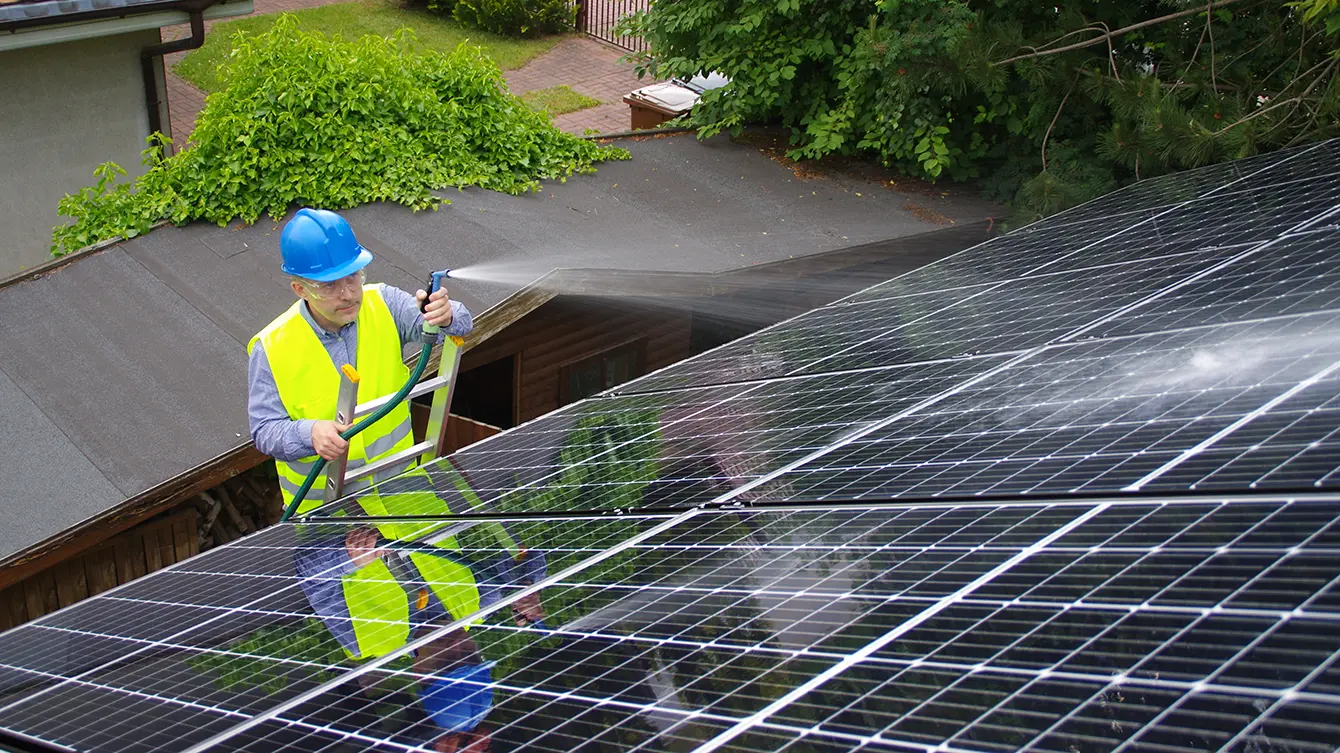
    For those with a one-story home, cleaning solar panels independently is an option. However, it is never recommended that anyone climb onto the roof to clean their panels. The falling risk is significant, and no cost savings are worth the potential danger.

    If a homeowner chooses to clean their solar panels themselves, it is crucial to follow the manufacturer’s guidelines to prevent damage1:

    • Do not scratch off dirt. Use a soft cellulose cloth or sponge to wipe away stubborn dirt gently. Avoid microfleece wool or cotton, which may cause scratches.
    • Rinse with lukewarm water. This effectively removes dust, leaves, and other debris without causing damage.
    • Use an alcohol-based glass cleaner. Avoid abrasive detergents or surfactants, as they may degrade the panel surface.
    • Apply isopropyl alcohol (IPA) selectively. It can remove stubborn stains or dirt within one hour of their appearance.
    • Avoid using high-pressure washers. Excessive pressure can damage the panels and reduce their effectiveness over time.

    Is Cleaning Necessary?

    Many homeowners find that cleaning their solar panels is unnecessary. For example, a homeowner with solar panels for 11 years has relied solely on occasional rain in Las Vegas to keep them clean. Despite this, they have not noticed any significant decrease in energy production. Some years, as observed in their monitoring app, they have produced more energy than the previous year.

    Given this, paying $400 per year for two cleanings may not be worth it, especially when considering that just a few days after a professional cleaning, the panels will likely look the same as they did before.

    Final Thoughts

    While solar panels can be cleaned, the cost-benefit ratio should be carefully evaluated before hiring a professional service. The slight increase in efficiency from cleaning often does not justify the expense. Homeowners with single-story houses may clean their panels themselves, following proper guidelines to avoid damage. However, in many cases, natural rain is sufficient to keep solar panels functioning efficiently.

    Ultimately, solar panel cleaning is not a necessity for most homeowners, and the decision should be based on personal circumstances, climate, and the system’s specific performance over time.

    1 https://us.qcells.com/resources/downloads/#safety

  • Robco Electric Reaches Milestone

    Robco Electric Reaches Milestone

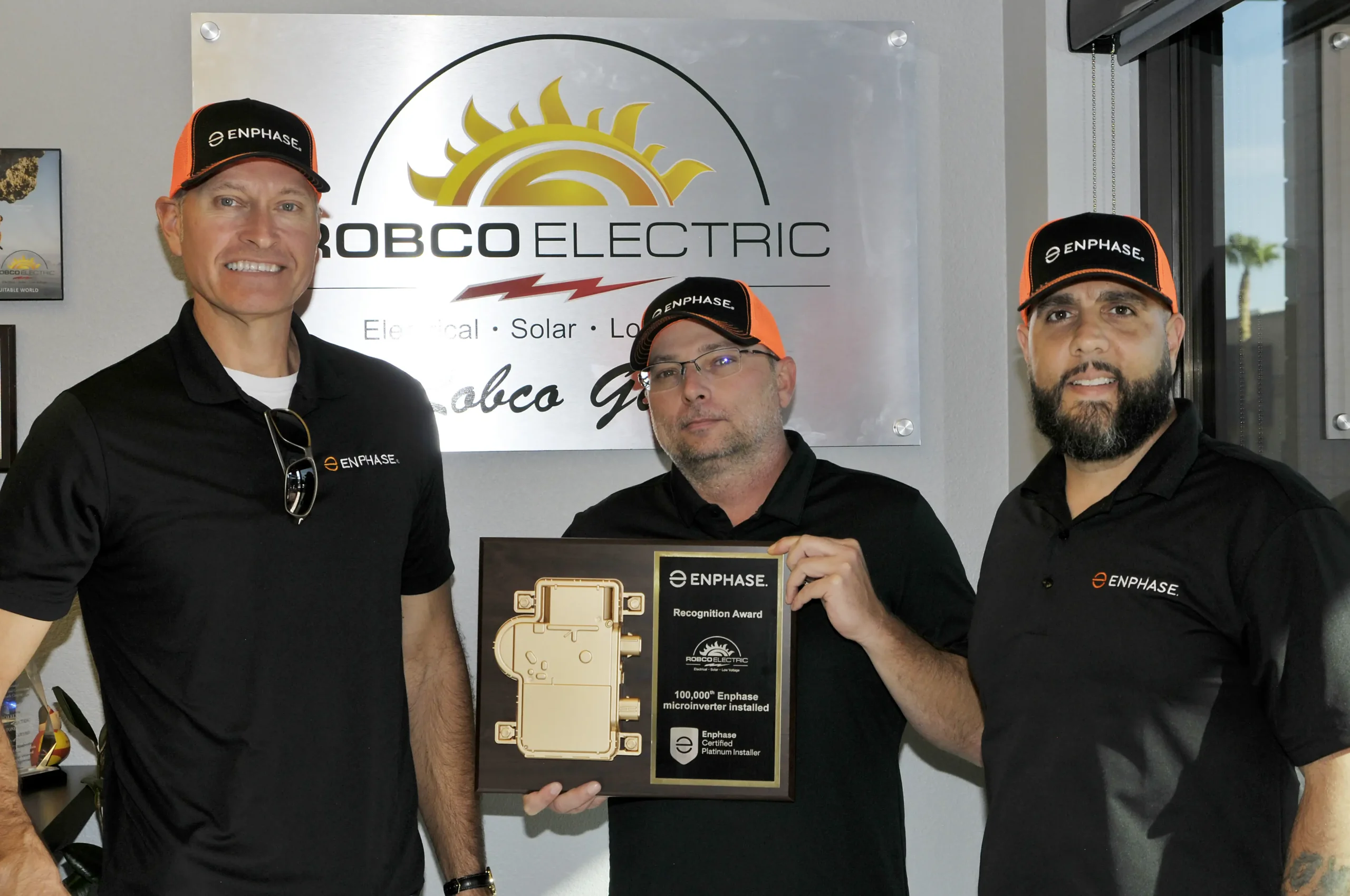
    100,000 Enphase Microinverters Installed

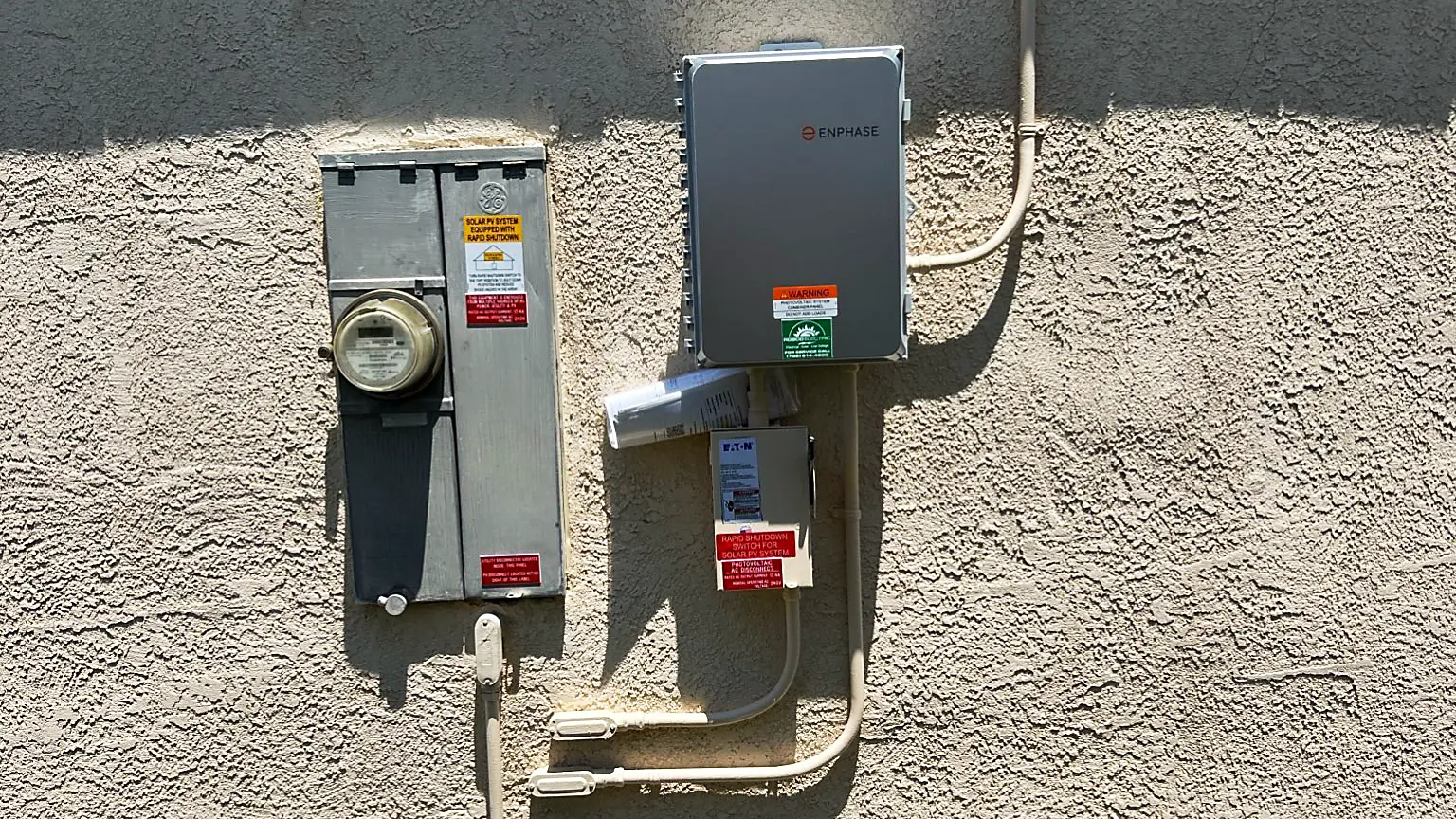
    Robco Electric, Inc., an Enphase Platinum Installer, recently achieved a significant milestone by installing its 100,000th Enphase microinverter. This achievement confirms Robco’s commitment to delivering cutting-edge solar technology and providing clean, reliable energy solutions to Las Vegas homeowners.

    Why This Milestone Matters

    Installing 100,000 microinverters is not just a numerical milestone but a significant step in adopting solar energy solutions across the Las Vegas Valley. Microinverters, especially those from industry leader Enphase Energy, play a critical role in maximizing the efficiency and output of solar energy systems. Each solar panel in a system equipped with Enphase microinverters operates independently, meaning that, unlike with other inverters, the overall system performance is not affected by shading, debris, or other issues on a single panel. This level of reliability and optimization is crucial for customers looking to get the most out of their solar installations.

    Robco’s decision to partner with Enphase is strategic. Enphase microinverters are known for their durability, efficiency, and technological innovation. Their ability to convert DC power from solar panels into AC power at the individual panel level has set them apart from traditional string inverters. This not only boosts the performance of solar arrays but also ensures a higher return on investment (ROI) for customers, as systems can continue to generate energy even when one panel underperforms.

    Enphase Microinverters

    Enphase microinverters have gained considerable popularity in the solar industry due to their high efficiency, long warranties, and advanced monitoring capabilities. Each microinverter comes with built-in monitoring technology, allowing users to track the performance of each solar panel through the Enphase App using any smartphone or tablet. This data-driven approach to energy management enables system owners to detect any issues quickly and resolve them before they impact overall system performance.

    Enphase has focused on improving system reliability by creating weather-resistant and long-lasting microinverters. These microinverters are designed to endure extreme weather conditions, including high temperatures, rain, and snow, making them a perfect choice for regions with diverse climates. For Robco Electric, this means they can confidently install Enphase microinverters, knowing they will perform reliably in the hot desert Las Vegas area.

    Benefits for Robco Electric’s Customers

    Reaching the 100,000th microinverter installation underscores Robco Electric’s commitment to providing its customers with top-tier solar solutions. For homeowners, this translates to more efficient energy systems, reduced energy bills, and an increased reliance on renewable energy sources.

    One of the primary advantages customers experience with Enphase microinverters is the ability to expand their solar energy systems more easily. Since each panel operates independently, adding more panels to an existing system is seamless. This scalability allows Robco Electric’s customers to adapt their solar systems to their growing energy needs over time without costly overhauls.

    Another key benefit for customers is the enhanced safety that comes with using microinverters. Unlike string inverters, which operate at high-voltage DC, Enphase microinverters convert DC to safer low-voltage AC at each panel. This reduces the risk of electrical fires and makes installations safer for technicians and property owners.

    Sustainability and the Future

    As more homeowners switch to solar energy, Robco Electric’s achievement of 100,000 Enphase microinverter installations highlights the company’s role in driving green energy. Each installation contributes to reducing carbon emissions, promoting energy independence, and creating a more sustainable future.

    This milestone also aligns with broader trends in the renewable energy industry. With increasing awareness of climate change and rising electricity costs, more people consider solar energy a practical and environmentally friendly solution. Enphase’s microinverter technology, paired with Robco Electric’s expertise in solar installation, ensures that customers receive the best possible performance from their solar systems.

    Looking Ahead

    Installing 100,000 Enphase microinverters is not just an achievement for Robco Electric—it’s a symbol of the growing importance of solar energy in today’s world. As the company looks to the future, it remains focused on continuing to provide innovative solar solutions that meet the needs of its customers.

    Robco Electric’s success in achieving this milestone reflects its dedication to quality, efficiency, and customer satisfaction. By continuing to install advanced technologies like Enphase microinverters, Robco Electric is helping to drive the solar industry forward, making renewable energy more accessible, reliable, and efficient for all.

    To set up a free consultation, please click here.

  • Fall Installs Maximize Net Metering

    Fall Installs Maximize Net Metering

    Here’s Why it’s a Smart Decision

    You’ll Maximize Net Metering Benefits

    Net metering in Las Vegas allows solar customers to receive credits on their NV Energy bill for the excess solar kilowatt hours they send back to the grid. With net metering, the energy you generate but don’t use in the cooler but still sunny months is “stored” as credits on your power bill. Those credits build up on your account during the cooler fall, winter, and spring months, so you have a bank of credits ready to offset your high electricity use in our scorching summers. 

    Las Vegas enjoys sunshine almost year-round. Even in the fall and winter, your solar panels will continue to generate energy. Because of net metering, Fall is a great time to install solar panels, giving you more months to bank credits before the summer heat and your energy use soars.

    How Does Solar Net Metering Work?

    Whenever the sun shines, your solar panels make electricity. Those solar kilowatt hours come down from your roof to your main electric panel. Whatever appliance (or circuit) is on in your house, like your bedroom light, TV, or air conditioner, will use those kilowatt hours before power is drawn from the grid.

    • If your solar panels produce more power than you need, the excess power is returned to NV Energy through your meter. They then sell it to your neighbors.
    • If your home uses more power than is being made by your solar panels, the extra power you need is drawn in from the NV Energy grid to meet that demand.

    At the end of every billing cycle, NV Energy takes the amount of power they sent you (kWHD) and subtracts the amount of power you sent them (kWHR). That’s right. What you send back to them wipes out what you use on a 1-for-1 basis.  So, the power your solar makes during the day pays for the power you need at night.

    • If you sent them MORE power than they sent you during the billing cycle, you get a credit on your power bill for 75% of the retail value for every surplus kilowatt hour (KWHA).
    • If they sent you MORE power than you sent them during the billing cycle, you pay for that power using the net metering credits on your account or pay cash if you are out of credits (KWHN).

    It works like “rollover minutes” used to work on cell phone plans before we all got unlimited plans. Like those rollover minutes, your net metering credits NEVER expire, and you can never cash them out. The credits sit on your account until you use them, and NV Energy automatically applies them. Most months after solar, you’ll only pay your basic connection charge plus taxes and fees.

    Avoiding Summer Delays

    • Summer is a busy time for solar installations in Las Vegas due to high demand. By opting for a fall or winter installation, you can avoid longer wait times and ensure your solar system is fully operational before installers get swamped with summer installations.

    Final Thought

    Installing solar panels in Las Vegas during the cooler fall and winter months positions you perfectly to capitalize on the region’s sunny climate and bank up plenty of net metering credits before the summer heat hits. You’ll also avoid summer delays and lock in the solar tax credit for the current tax year.

    Ask for a quote today.

  • Robco Electric, Inc. Selected as Preferred Vendor / Partner by Diazo Wealth

    Robco Electric, Inc. Selected as Preferred Vendor / Partner by Diazo Wealth

    Las Vegas, NV – April 24, 2023 – Robco Electric, Inc. is proud to announce that it has been selected as a preferred vendor/partner by Diazo Wealth, a leading wealth management company dedicated to providing solid foundations for its clients’ financial well-being.

    Robco Electric and Diazo Wealth

    The partnership between Robco Electric and Diazo Wealth marks an important milestone for both companies. It will allow Robco Electric to expand its services and offer its expertise in electrical contracting to a wider audience. As a preferred vendor/partner, Robco Electric will work closely with Diazo Wealth to provide exceptional service to its clients and ensure that all projects are completed quickly, accurately, and within budget.

    Robco Electric believes in bidding on projects fairly and being transparent about timelines and budgets. The company treats everyone it does business with, including its employees, with respect, courtesy, and gratitude. This approach has helped Robco Electric build a strong reputation in the industry and win the trust of its clients.

    “We are thrilled to have been selected as a preferred vendor/partner by Diazo Wealth,” said Rob Kowalczik, President at Robco Electric. “We are committed to providing the highest quality electrical contracting services to our clients, and we look forward to working closely with Diazo Wealth to help them achieve their goals.”

    For more information about Robco Electric, Inc., please visit https://www.robcoelectriclv.com.

    For more information about Diazo Wealth, please visit https://www.diazo.com.

  • Some Things Are Worth Aiming For

    Some Things Are Worth Aiming For

    The event allowed participants to showcase their skills and provided a valuable resource for helping youth develop essential life skills. Programs like sport clay shooting offer a wealth of benefits for young people, including decision-making skills, self-discipline, self-confidence, problem-solving skills, safety standards, sportsmanship, ethical behavior, character, good citizenship, and an appreciation and understanding of natural resources.

    Boy Scouts

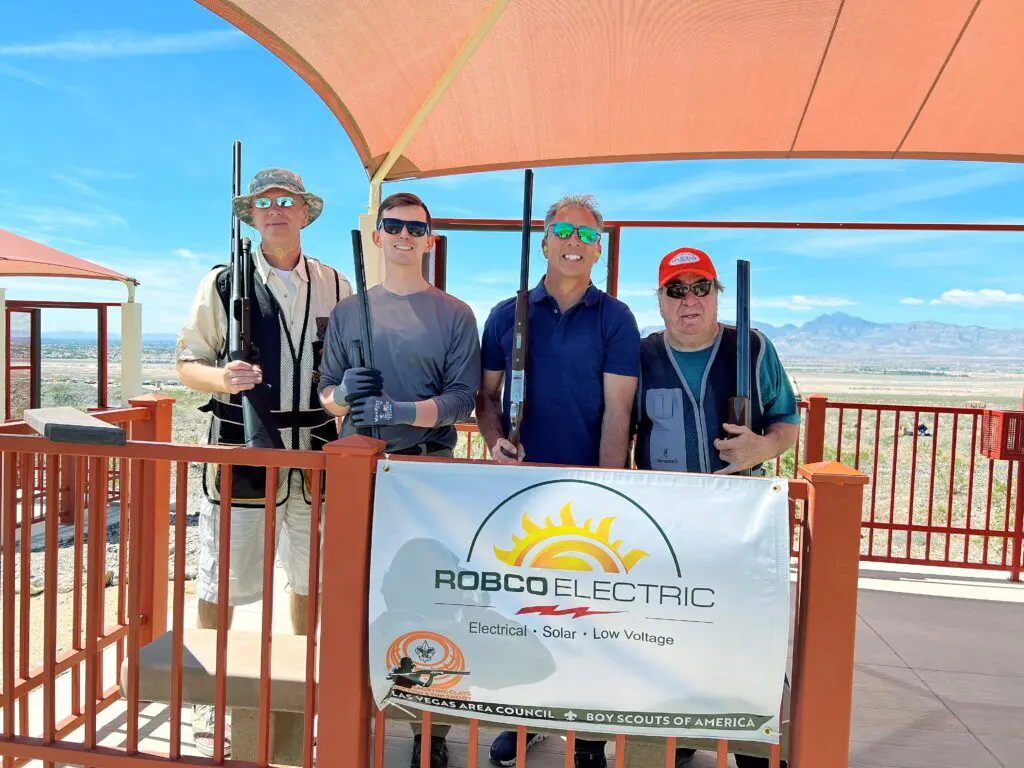
    On Saturday, April 22, 2023, Las Vegas Area Council Boy Scouts hosted an event at the Clark County Shooting Complex in Las Vegas, Nevada, for a day of sport clay shooting. Participants aimed for their targets from 8 a.m. to 1 p.m.

    Participation in lifelong recreational activities can also strengthen families, as families can bond over shared interests and experiences. Additionally, shooting sports can help young people develop physical and mental control, goal-setting skills, and an awareness of related career opportunities.

    For Boy Scouts, in particular, sport clay shooting offers the opportunity to earn the Shooting Sports merit badge. Requirements for the badge include identifying and demonstrating the rules for safely handling a shotgun and the knowledge, skills, and attitude necessary to safely shoot moving targets using the fundamentals of a shotgun.

    The participants at the Clark County Shooting Complex showed that some things are worth aiming for. Not only did they demonstrate their skills in sport clay shooting, but they also showcased the valuable life skills that programs like this can offer to young people. By participating in events like this, we can help to ensure that our youth are equipped with the skills they need to succeed in all areas of life.

  • Science Behind Solar Power

    Science Behind Solar Power

    Photovoltaics

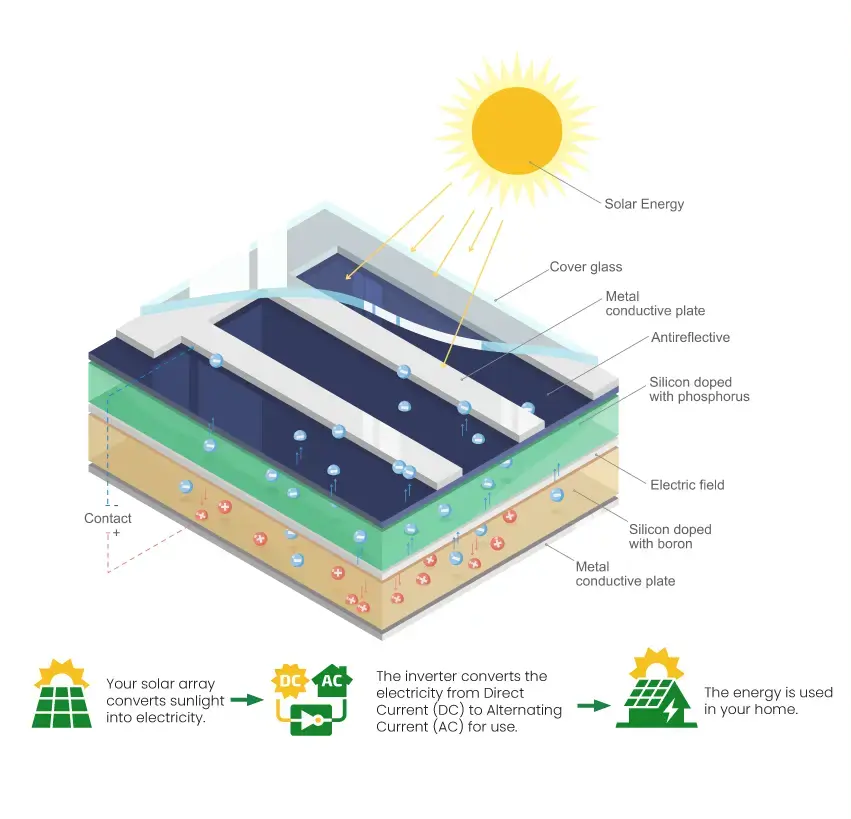
    Photovoltaic cells are made of semiconductor materials, such as silicon, that absorb sunlight and convert it into electricity. When sunlight hits the cells, it creates an electric field that allows electrons to flow. This flow of electrons is then captured and channeled through wires to create an electrical current that can be used to power homes, businesses, and other applications.

    Solar panels comprise multiple photovoltaic cells2 and are typically installed on rooftops or in open spaces where they can absorb the most sunlight. In addition to photovoltaic cells, solar panels also contain other components, such as an inverter, which converts the Direct Current solar panels can generate into Alternating Current (AC) that appliances and other electrical devices can use.

    Solar Power

    Solar power is a form of renewable energy derived from the sun’s rays. The sunlight that strikes the earth’s surface in an hour and a half is enough to handle the world’s energy consumption for a full year1. The basic principle behind solar power is the conversion of sunlight into usable energy. This is done with photovoltaic cells or solar cells.

    The amount of energy solar panels can generate depends on several factors, including the amount of sunlight available, the panels’ angle and orientation, and the photovoltaic cells’ efficiency. The conversion efficiency of a photovoltaic (PV) cell, or solar cell, is the percentage of the solar energy shining on a PV device that is converted into usable electricity.3 Advances in solar technology have led to improvements in efficiency, making solar power a more viable and cost-effective option for generating electricity.

    Call us, Robco Electric. We can handle the design and installation of your solar system. We will help you with all the questions and apply for appropriate permits to ensure you have all the necessary permits before installing your solar panel system.

    1 https://www.energy.gov/eere/solar/how-does-solar-work

    2 https://www.energy.gov/eere/solar/solar-photovoltaic-technology-basics

    3 https://www.energy.gov/eere/solar/solar-performance-and-efficiency

  • Solar Panel System Expansion

    Solar Panel System Expansion

    Current and future energy needs

    Expanding a solar panel system can significantly increase your solar production and reduce your NV Energy bill. Here are some things to consider when expanding your solar panel system:

    • Assess your energy needs. Before expanding your solar panel system, assessing your current and future energy needs is essential. This will help you determine the size and capacity of the additional solar panels you will need. For example, if you plan to add a pool or spa, an electric vehicle, or even expand the number of people in the household.
    • Check your current solar panel compatibility. If you add panels to an existing system, ensure the new panels are compatible with your current solar panels. This will ensure that your system runs efficiently and effectively.
    • Consider upgrading other components. Expanding your solar panel system may require upgrading components such as inverters. Make sure these components are also compatible with your new solar panels.
    • Monitor and maintain your system with the Robco App. Once your solar panel system is expanded, monitoring and maintaining it regularly is important. This will ensure it continues to run efficiently and effectively and can help identify any issues that need to be addressed.

    Call us, Robco Electric. We can handle the design and installation of your system expansion. We will help you with all the questions and apply for appropriate permits to ensure you have all the necessary permits before expanding your solar panel system.